Extract visual cues
Note hairstyle, palette, pose, mood, clothing category, and camera framing.
Use reference details responsibly: hairstyle, color mood, outfit inspiration, pose, or vibe. Then transform those notes into an original anime character direction.
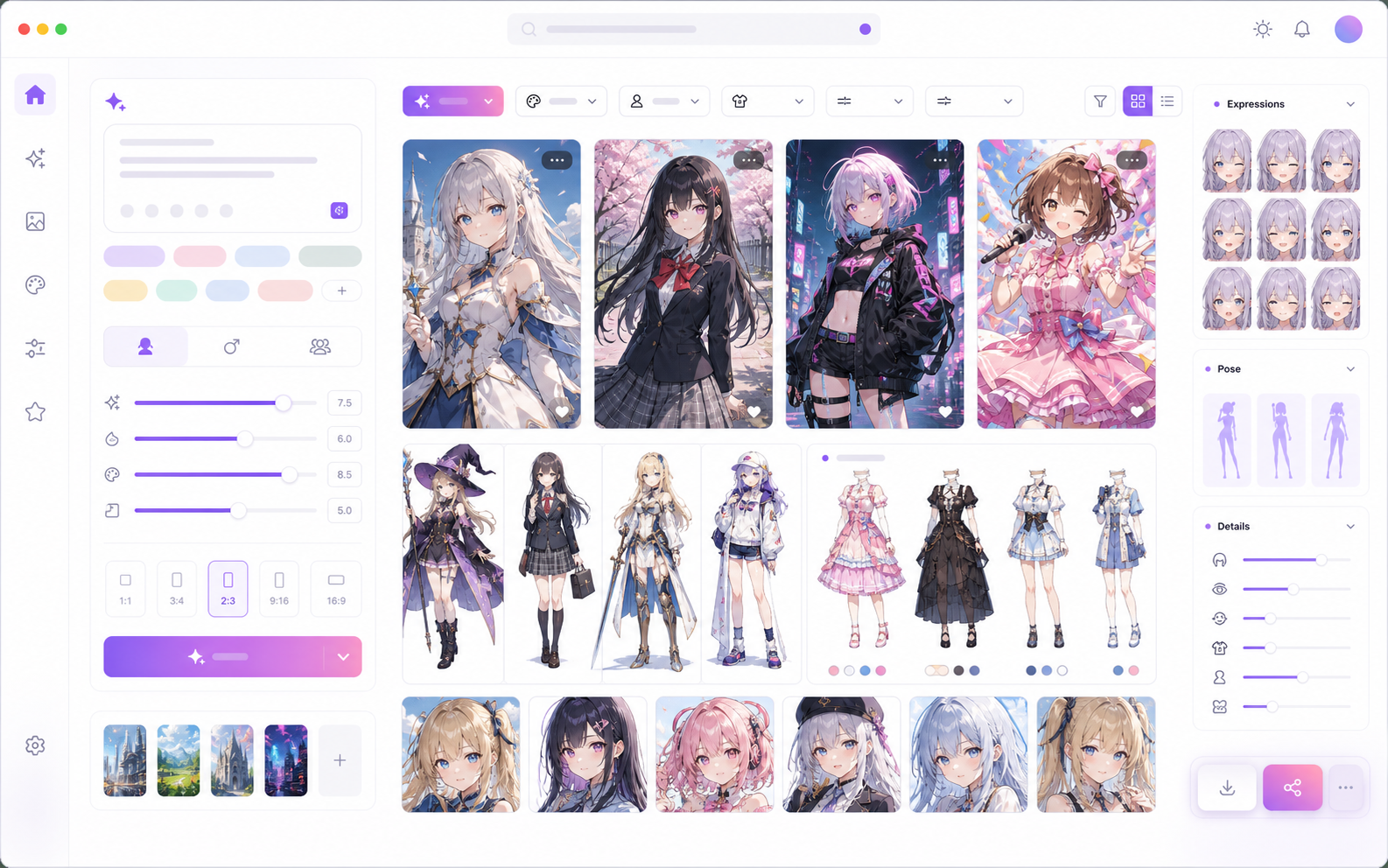
Use this page when you want a practical path from idea to usable character. Start with the role, define the personality, add visual details, then turn the profile into a clear image or story prompt.
Every module is built around a real creator need: writing, profile planning, anime art direction, image generation, cast building, and character consistency.
Note hairstyle, palette, pose, mood, clothing category, and camera framing.
Change role, outfit, world, personality, accessories, and story context.
Translate reference cues into anime proportions, expression, lighting, and line style.
Avoid copying real people; use references as creative direction for an original character.
Copy this mental model: role, personality, visual traits, outfit, pose, expression, setting, style, and scene purpose. The more connected the details are, the less random the output feels.
anime character, [role], [personality], [hair and eyes], [outfit], [pose], [expression], [setting], [lighting], [art style], character sheet quality
Use an OC maker workflow to create original anime characters with profile details, visual prompts, outfit variants, and story-ready character art.
Write richer character descriptions for anime OCs, game characters, story casts, visual prompts, and roleplay profiles.
Start with a free AI character generator flow for anime character ideas, descriptions, visual prompts, and first-image concepts.
Plan character voices, dialogue tone, speech patterns, and personality notes before creating anime character scenes.
Build original character ideas with AI: profiles, traits, cast roles, backstories, art prompts, and anime-style visual direction.
Create anime character art prompts for original characters, fantasy heroes, game portraits, story covers, and visual concept sheets.
You can use photo references as inspiration for pose, mood, outfit, or color, then create an original character concept.
No. Use references responsibly and transform them into original character direction.
Start with role and personality, then add visual traits, outfit, pose, expression, setting, style, and the mood of the scene.
Yes. The same workflow works for game characters, manga casts, visual novels, story profiles, avatars, and concept art.
Consistency improves when you keep a profile sheet with traits, outfit rules, colors, expressions, backstory, and prompt wording.
Yes. Add anime style direction, genre, face shape, hair design, clothing details, pose, and scene context.
Use photos responsibly as reference for pose, color, outfit category, or mood, then create an original character.
Start with one character profile, generate a visual direction, then expand into variants, cast relationships, and scenes.